


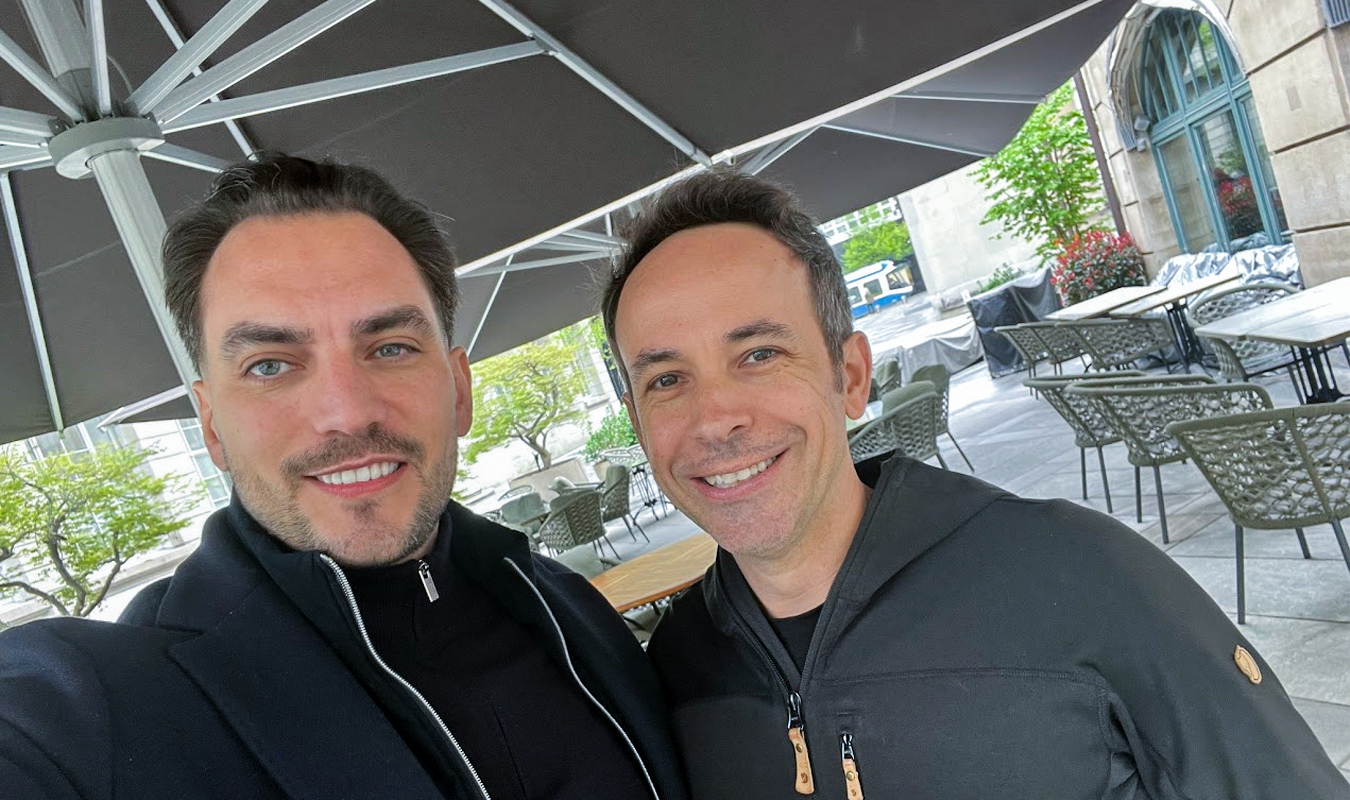
Mike DelPrete in conversation with Levent Künzi about the development of the real estate market and the role of properti as the leading real estate tech agent in Switzerland. The discussion will focus on the differences between the Swiss, European and US real estate markets – particularly with regard to the significantly lower transaction rate and the limited availability of data compared to the USA.
In addition, Levent Künzi provides insights into the PropTech start-up landscape and shares key learnings from the market environment. Another topic is properti’s strategic orientation, clear focus and long-term growth plans.
Listen to the original on YouTube now
Listen on Apple Podcasts or Spotify
Listen to the original directly here
The German version as AI translation as follows:
Hi everyone, this is Mike Delprey, and you’re listening to Context, the podcast where I talk to industry leaders about the technology and the businesses that are changing and not changing in real estate. That’s the on-the-road edition. So I’m here in beautiful Zurich, Switzerland, with Levent, CEO and founder of properti.
Levent Künzi: Hey, Mike. Nice to meet you. Thanks for being here.
Mike DelPrete: The joy is mine. During our conversation just now, I thought, “Oh my God, we have to record this. This is really interesting to talk about the differences between the Swiss market, the European markets, the US market, the world of startups in the real estate tech space, what works, what doesn’t work. So here we are. Tell me briefly what properti does.
Levent Künzi: Yes, of course. properti is a technology-supported broker that on the one hand really empowers real estate agents to carry out more transactions qualitatively, and on the other hand of course creates more transparency on the Swiss real estate market.
Mike DelPrete: Okay. That’s great. Is there a US company that you guys kind of model yourselves after or think, “Oh, we’re just like that company?
Levent Künzi: I don’t think so yet, but we are very inspired by the US market because I think the US market is doing a pretty good job. But yes, let’s see which companies are the best fit, right?
Mike DelPrete: Okay. And just to put that in perspective, you told me, depending on the metric, you guys are maybe the third or fourth largest broker in the country in terms of active listings.
Levent Künzi: Exactly. If you compare active offers, we are more or less the third or fourth largest broker in Switzerland. But I think the metric is also difficult to judge because we don’t know how many transactions are carried out at the end of the day. I would say at the moment we are the third or fourth largest in Switzerland.
Mike DelPrete: That’s interesting. You don’t know how many transactions. So what data do you have on the real estate market?
Levent Künzi: Yes, that is indeed the Swiss market. You know that there is no open data like we have in the US market. And we can compare the active offers, but we don’t know how many transactions an agency actually carries out. So we can’t compare the different agencies. But on the other hand, of course, there is also the aspect of off-market offers, which is, yes, really the data situation in Switzerland.
Mike DelPrete: Do you wish you had more access to more data?
Levent Künzi: I love data. Data is very important to us. But it’s difficult because even in Switzerland, the various markets are not open. There are some cantons that provide open data – so we know who the owner of the property is – but in some cantons the data is not openly available. That is a challenge.
Mike DelPrete: Interesting. You just asked me how many properties the average American buys in their lifetime. I roughly estimated three to five. How high is this figure in Switzerland?
Levent Künzi: The figure in Switzerland is around 0.8 – 0.8 per life!
In Switzerland, however, there are two different figures for the number of transactions. There are figures that say there are over 45,000 sales transactions, other sources say 60,000. So the market is very challenging and yet differs from that in the USA.
Mike DelPrete: Yes, absolutely, what does the real estate tech startup scene look like here in Switzerland and in Europe?
Levent Künzi: Switzerland is a pretty small country. There is still huge potential to disrupt the market, as the brokerage business here is really old-fashioned and traditional. But what I have observed over the last few months and years is that there are a lot of great ideas out there. But at the end of the day, these ideas have no value if you as a company can’t pay the bills. Overall, we are noticing a change in the PropTech startup scene. We see use cases that would really work. With AI, the world as a whole has changed very quickly, I see huge potential here overall.
Mike DelPrete : Are there or have there been companies or disruptors in the industry that have really changed the market?
Levent Künzi: The current economic slowdown – both in Europe and worldwide – is having a noticeable impact on the real estate market. This shows how important sustainable and viable growth is for companies. We have also increasingly recognized that investors are looking more critically at business models that do not offer clear prospects for profitability. One example is McMakler: despite strong growth in the past, the company has been accused of making excessive losses and not showing a clear path to profitability. According to media reports, McMakler has already gone through several rounds of redundancies – the third this year alone and several last year.
Mike DelPrete: That’s a real challenge – even for a start-up: how do you achieve sustainable growth?
Levent Künzi: Yes, definitely. In our case, we bootstrapped in the first two years – that was an important cornerstone for me personally. Growth is of course desirable, but we also learned that it doesn’t work without a clear focus. It is important to keep an eye on the relevant key figures, analyze growth areas in a targeted manner and consciously decide where it makes sense to invest. It is essential to develop an awareness of risk and to constantly monitor the market in order to be able to react flexibly and based on data.
Mike DelPrete: Have you made any concrete decisions in the last twelve months to achieve more sustainable growth?
Levent Künzi: Yes, definitely. One of the most important strategic decisions was to consistently focus on our core business. You already mentioned this in an earlier post: It’s about defining exactly which area we want to be a leader in – and how we can achieve this. This clarity has increasingly crystallized for us over the last twelve months. Our focus is now clearly on the residential real estate sector – specifically on sales and rentals. In the initial phase, we still had the vision of a comprehensive 360-degree ecosystem. In the meantime, we have decided: We will focus on what we are particularly good at – and that is residential real estate. This is precisely the segment in which we want to be the best. This is also the way we want to achieve our target of a 5% market share.
Mike DelPrete: So this is your path to the 5% market share goal?
Levent Künzi: Exactly.
Mike DelPrete: Can you give a specific example of how you have implemented this strategic focus – i.e. from the 360-degree ecosystem you were aiming for to a clear focus on brokerage services?
Levent Künzi: Yes, for sure. As already mentioned, we bootstrapped properti in the first few years. In a later phase, we also offered property management services for around twelve months. The aim was to give private owners a more comprehensive 360-degree view of their property. However, over time it became clear that this was a completely different business model – with its own requirements and processes. We therefore made a conscious and relatively quick decision to abandon this area. This was an important strategic step towards a clear focus on the sale and rental of residential properties.
Another example relates to supplementary services such as relocation, cleaning, mortgages and insurance. We continue to offer these – but in fully automated form and exclusively via external partners. We no longer invest any internal development resources here, as these processes are outsourced efficiently and scalably.
Mike DelPrete: That’s interesting – because it contrasts with what many large brokerage firms in the US and other markets are doing: they are expanding their offerings and trying to build a comprehensive ecosystem.
Levent Künzi: Yes, we also had to learn that first. Originally, we wanted to bring more efficiency to the transaction process through cross-selling and additional services. However, challenges arose in practice – for example, when partners did not respond to leads as agreed. This ultimately led to more effort on our part. We therefore decided to focus clearly on transactions – we want to be a leader in this area. This is where we are concentrating our energy.
Mike DelPrete: Has this new focus noticeably changed the development of your company?
Levent Künzi: Absolutely – 100%. We work much more efficiently today. Our team is more focused and our employees know exactly which direction we want to take. This clear course towards our goal – 5% market share in Switzerland – also provides orientation and relief within the organization. A common understanding has emerged: We know where we want to go and how we are going to get there. And in my view, this is precisely one of the decisive factors for our progress.
Mike DelPrete: Do you also monitor other markets, for example the USA?
Levent Künzi: Yes, I now have the opportunity to focus more on strategic issues. In the first few years, like many founders, I was very operationally involved and worked on all fronts myself. In recent months, I have been able to analyze international markets more closely in order to understand which approaches are successful there – and which of them could be transferred to the specifics of the Swiss market. I am convinced that if a start-up or scale-up wants to grow in the long term, it needs a clear strategic compass and a willingness to continuously improve. It is crucial to know where you want to go – and at the same time to be open to regularly questioning and optimizing existing processes. This is exactly what helps me to further develop our strategy and drive our business forward in a targeted manner.
Mike DelPrete: Can you give us a few examples of what inspires you in particular – companies, trends or specific topics?
Levent Künzi: Particularly with regard to the US market, I find some brokerage companies very inspiring – Keller Williams, Compass or eXp, for example. What particularly impresses me is the focus on the brokers’ personal brand. In the USA, the individual broker is at the center of attention and is specifically developed and promoted. In Switzerland, on the other hand, the focus is almost exclusively on the company, not on the people behind it. I want to do things differently at properti: Our brokers should be visibly in the foreground – not just the properti brand. I also find the eXp model exciting in terms of broker loyalty. It raises the question for us of how we want to organize our cooperation in the future: Should brokers be permanent employees, act as partners or work in a franchise model? The aim is to find the best solution for us and our growth targets.
Mike DelPrete: What is the current situation at properti? Are your brokers employed or do they work as franchisees?
Levent Künzi: Our brokers are currently employed. Particularly in the initial phase, we deliberately brought lateral entrants into the team – that was part of our strategy. Now we are focusing more on increasing the number of brokers in a targeted manner. We are currently examining which model is most suitable – whether we should continue to rely on employment or develop new partner concepts. I am currently working intensively on precisely this topic.
Mike DelPrete: Is the permanent employment model more common in Switzerland or is it a specialty of yours?
Levent Künzi : If you look at the big players in Switzerland – such as Remax or Engel & Völkers – you can see that they mainly work on a franchise model. However, there are also traditional real estate companies where agents are permanently employed. In Switzerland, there are essentially two models: salaried agents on the one hand and franchisees on the other. There are also hybrid models – such as Neho – where agents are also employed, but on a fixed salary basis with a reduced commission share. Overall, the market moves between these two main forms of cooperation.
Mike DelPrete: You mentioned that you are inspired by the US market – particularly the strong focus on the personal branding of brokers, as opposed to the corporate brand. How do you put this principle into practice at properti?
Levent Künzi: We are currently working on a project called Local Hero, which goes in exactly this direction. We have already talked about the fact that real estate is a very local business – and that the markets function very differently from region to region. The aim of the project is to position our real estate agents specifically in their respective regions and make them visible as local experts. The aim is to establish them as trustworthy contacts for buyers and sellers – with specialist knowledge, a regional presence and targeted content. This project is similar to Zillow’s Premier Agent program in the US. Our approach is to consciously strengthen the personal branding of our agents and thus complement the properti brand in a meaningful way.
Mike DelPrete: In this context, you have also joined the Real Estate Innovation Hub I have joined my project in Colorado. You will be traveling there later this year and spending a few days with me and other members. This is a significant investment of time and resources. What motivated you to do this?
Levent Künzi: For me, continuous development is essential – both on a personal and entrepreneurial level. Our aim is to have the best brokers on the market. That’s why we invest heavily in training, further education and personal development. I am convinced that sustainable success comes from investing in people. As CEO, I see it as my job to provide new impetus and actively drive innovation. Joining the Innovation Hub is a valuable opportunity for me to gain new perspectives – and I am very much looking forward to the exchange in Colorado.
Mike DelPrete : You have already spoken to some members of the hub – even though they are only active in the US market. Was that still helpful for you?
Levent Künzi: Absolutely. Of course, it’s not about transferring the US model one-to-one to Switzerland. Rather, it’s about gaining a better understanding of the mechanisms and mindsets behind successful models – and adopting specific elements that can be adapted for the Swiss market. The discussions so far have been very informative. I also appreciate the direct, solution-oriented mentality that I have experienced in the US market – I really like this pragmatic approach.
Mike DelPrete: On the subject of technology – is there a solution that you use at properti that makes a real difference?
Levent Künzi: Yes, for me the focus is on efficiency. Our technological focus is aimed at empowering our brokers to make the entire marketing process more efficient. For me, this is also the future: technology, especially AI, should not replace, but support – be it by optimizing internal processes at HQ or by providing targeted assistance to our brokers on site. Our goal is a largely automated transaction – from initial contact to the notary appointment. We have already achieved this level of automation in the rental sector. We are working on it in the sales process. In concrete terms, this means less manual work, more time for personal contacts, advice and viewings – in other words, where estate agents really add value.
Mike DelPrete: What do consumers in Switzerland want when they buy a property or commission a real estate agent?
Levent Künzi: I recently had a personal experience of this when I wanted to buy a property myself. I made inquiries about several properties and was surprised at how little digitalized the process still is in Switzerland. In some cases, I had to wait five days for an exposé and follow up with the estate agent several times to even get a viewing appointment. The need is clear: buyers today want to be able to access all relevant information immediately, view a property straight away and – if desired – submit an offer directly. Expectations are therefore not exaggerated, but are based on today’s digital availability. It’s about transparency, speed and accessibility – consumers expect this as a matter of course today.
Mike DelPrete: And what do brokers want today?
Levent Künzi: Lead generation is clearly a key issue. If you look at the US market, brokers there are often responsible for acquiring leads themselves. In Switzerland, the focus is more on seller leads, while buyer leads play a lesser role. At properti, we see it as our job to provide brokers with high-quality seller leads. At the same time, our goal is to relieve their operational burden – through lean processes and targeted support from HQ. Ultimately, the aim is to enable them to concentrate on the essentials: Customer contacts, consultations, viewings. We want to strengthen our brokers through technology and structure – and impress consumers with comprehensive data and fast response times.
Mike DelPrete: How do you generate sales leads at properti?
Levent Künzi: We pursue a consistent omni-channel marketing strategy. This means that we use a variety of channels – from TV campaigns to performance marketing and content through to strategic partnerships. We rely heavily on data. We have access to over 20 years of historical real estate data, which enables us to take targeted and effective action. This data-based foundation has a significant impact on the efficiency and direction of our marketing activities.
Mike DelPrete: Does that mean you flood the market with advertising and hope that potential sellers will come forward?
Levent Künzi: No, we don’t work like that. Our approach is much more targeted and data-driven. We try to act as predictively as possible – in other words, to identify potential sellers at an early stage. At the same time, brand building also plays a central role. If you take Remax as an example – a well-known brand from the USA – you can see how important brand awareness is for lead generation. Our aim is to combine data-driven marketing with a strong brand presence as part of a well-thought-out omni-channel strategy.
Mike DelPrete: Why is the brand so important in this context?
Levent Künzi: First and foremost, it’s about trust. We have been on the market for five years now, and trust plays a key role in the Swiss real estate market in particular. In Switzerland, people don’t usually sell several properties in a lifetime – for many, it’s a one-off decision, often a life’s work. The emotional and financial significance of this transaction is correspondingly high. A strong brand conveys reliability and gives potential sellers the certainty that they are in good hands with us. That is why building brand trust is a key success factor for us.
Mike DelPrete : There is a lot of movement in the real estate market in the USA right now. We spoke earlier about companies like Zillow, Redfin and Rocket. Are you following these developments?
Levent Künzi: Yes, definitely. I am keeping a very close eye on the US market – especially on what is currently changing there. The consolidation we talked about over coffee earlier is an exciting process. The US market has always been an important indicator for developments in Europe. Often, trends that emerge there can also be observed here with a time lag. I therefore also expect to see increasing market consolidation in Europe, particularly in Germany and Switzerland. I also see factors such as the growing influence of artificial intelligence and rising costs for performance marketing – for example Google Ads – as further drivers of this development. Ultimately, consumers will benefit from this, as efficiency and clear market structures will make real estate brokerage simpler and more transparent. And that is precisely our goal at properti: we want to simplify real estate transactions and help people find their home.
Mike DelPrete: I’m sure you’re familiar with the relationship between real estate agents and real estate portals in the USA. Is it comparable in Switzerland?
Levent Künzi: That’s a very good – and certainly political – question. There are essentially two large portals in Switzerland: Homegate and ImmoScout on the one hand, both of which belong to the Swiss Marketplace Group (SMG), a merger of several media companies and a private equity investor (General Atlantic), with the aim of going public at a later date. On the other side is Newhome, which is around 50% owned by banks and brokerage companies. Newhome aims to offer estate agents a platform on which they can place dominant advertisements independently of the large market – a kind of alternative to SMG.
SMG, on the other hand, focuses more on the platform business – with increasing price models, which is challenging for many brokers. Some have therefore announced that they will no longer advertise there. Our stance at properti is clear: we focus on customer benefit. That’s why we consciously work with all relevant marketplaces – regardless of their ownership structure. What matters to us is that our customers receive the best possible visibility and information.
Mike DelPrete: The Swiss model – as in almost all international markets – differs significantly from that in the USA because there is no central platform like an MLS here.
Levent Künzi: Exactly, that’s a key difference. A Multiple Listing System (MLS), as we know it from the USA, does not exist in Switzerland. The market structure is more fragmented and there is no central database through which real estate offers are bundled. This affects many marketing processes and creates both challenges and opportunities.
Mike DelPrete: So the business model of the real estate portals is based on a pay-per-listing approach: anyone who wants to advertise a property – whether an estate agent or a private individual – pays for it and decides for themselves how much they want to invest and on which portals they want to be present. How do you handle this at properti? Do you offer your properties on all platforms or do you make a targeted selection?
Levent Künzi: We deliberately publish our listings on all relevant portals – because we always focus on the consumer. Our aim is to find buyers or tenants quickly and efficiently – regardless of which portal they use. Of course, there are other estate agents who deliberately focus on just one portal. Platforms such as Homegate and ImmoScout – both part of the Swiss Marketplace Group – also pursue a model that has certain parallels with Zillow’s Premier Agent model: they generate seller leads, sell them on and thus also influence the value chain. Some brokers take a critical view of this – they see it as market intervention. Personally, I think what counts in the end is whether the service serves the consumer. If a broker wants to obtain leads via these channels, that’s their decision – it’s an open market and everyone can choose their own path.
Mike DelPrete: You mentioned that you’ve been on the road with properti for about five years.
Levent Künzi: Exactly, properti was founded five and a half years ago. I myself have been active in the real estate industry for over 16 years. And yes – the last five years have been intensive, dynamic and full of developments.
Mike DelPrete: Is there anything you know today that, looking back, you wish you had told yourself at the beginning?
Levent Künzi: Absolutely. I am convinced that mistakes are an essential part of any start-up or scale-up journey – provided you reflect on them honestly and use them to optimize your processes. One of the most important insights for me personally: focus. I should have advised myself earlier to set the focus even more clearly. It’s not about doing everything at the same time, but about being excellent in one area. One example: there was a moment when we considered expanding into Germany. Looking back, it was the right decision to say: No – we’ll concentrate on Switzerland first, deliver top performance here, prove that we can be the market leader – and then we’ll think about other markets. This focus has helped us to mature as a company. And that’s exactly what I would tell my former self: Concentrate on the essentials.
Mike DelPrete: That sounds great – and it confirms a lot of what we keep seeing. I often talk about it: If you get too bogged down, especially in real estate, you quickly lose direction. So you want to stay focused and make properti the number one in Switzerland. What are your expansion plans? Where do you see the company in five years’ time?
Levent Künzi: First of all, it’s clearly about becoming the market leader in Switzerland – and I think we’ve been able to clearly demonstrate in recent months that our model works. As soon as we have achieved this, we want to expand – but with caution. We see different markets in Europe with different customer needs and therefore different business model requirements. Our expansion plans include countries such as Germany, Austria, Spain and Portugal. The aim is to establish properti as a pan-European player – but without pressure or actionism. We are consciously taking the time to prepare ourselves. The decision to expand is not made by me alone, but is a strategic decision made by the entire management team – when we all have the feeling: We are ready now.
Mike Delprete: Okay, we’re almost at the end. Finally, a question that I usually ask at the beginning: What does a typical start to your working day look like?
Levent Künzi: I’m an early riser. My day usually starts with a short meditation session – about five minutes to clear my head. After that, I work very hard for two to three hours and then go to the gym, where I train for around an hour and a half. After that, my regular working day begins. I work with a clearly structured weekly schedule:
On Mondays, KPI analyses and management meetings are on the agenda. On Tuesdays, I hold one-on-one meetings with my team members. On Wednesdays, I devote myself to project work – I prepare in the morning, followed by project meetings after lunch. We have three cross-functional projects that the whole company is working on – very focused. Thursdays and Fridays are all about strategy for me. This structure helps me enormously to maintain an overview and work in a targeted manner. I believe strongly in organization.
Mike DelPrete: That sounds very structured – almost typically Swiss.
Levent Künzi: laughs Yes, maybe a little.
Mike DelPrete: And the coffee here in Zurich? It seems to be quite good too.
Levent Künzi: Absolutely, I love coffee – and I hope you enjoyed it too. This is one of my favorite cafés in the city.
Mike DelPrete: Absolutely – it was great. I really enjoyed the conversation. Levent, thank you so much for your time and your candor. It was a pleasure talking to you here.
Levent Künzi: Many thanks to you too – and enjoy your time in Switzerland.
Mike DelPrete: I’m Mike DelPrete and you’ve been listening to Context. If you want to listen to more episodes, follow my analysis, or sign up for my newsletter, you can find all the info at mikedp.com. See you next time!
Let the experts guide you. We are at your disposal for questions and non-binding advice. Arrange a consultation directly or call us on +41 44 244 32 00.